Belgian B&B implements sustainable circular solutions: A case study

A bed & breakfast in Nieuwpoort, Belgium has leveraged the support of a European Union-funded project to implement viable ‘circular’ solutions. According to authors Angelo Sciacca, Lucien von Schomberg, and Eline Brutyn, the B&B’s owners have set a good example for other travel & tourism entrepreneurs to follow.
It’s a “Good Tourism” Insight. [You too can write a “GT” Insight.]
Travel & tourism plays a big part in implementing climate actions and generating benefits for host communities.
By applying circular economy strategies — as opposed to the linear economy or “take-use-dispose” model of resource management — the tourism sector contributes to positive local and global environmental changes by helping build a more resilient society.
In this “Good Tourism” Insight, we share a case study in the practical implementation of circular solutions in a coastal destination of the 2 Seas region (Belgium, England, France, and the Netherlands).
“From the Isles of Scilly to Norfolk in England and from Somme to Texel on the continental side, the Interreg 2 Seas area covers both rural and urban territories. With a total population of about 29 million inhabitants, the area is one of the most densely populated of Europe.”
_ Interreg 2 Seas Mers Zeeen website
We draw on the experience of the EU 2 Seas Interreg FACET project (FACET = Facilitating the Adoption of Circular Entrepreneurship in the Tourism and Leisure Sector).
The circular economy applies three principles to the material cycles:
- Reducing waste and pollution;
- Keeping products and materials in use; and
- Regenerating natural systems.
These principles play a key role in the sustainable development of coastal destinations, particularly in response to the effects of mass tourism markets, resource scarcity, and climate change to which these geographic areas are especially vulnerable.
The circular economy is an opportunity to both minimise the negative impacts that have long been associated with tourism, and to boost the socio-economic and environmental contribution that tourism can and should generate for these destinations.
For instance, the circular economy can:
- Lead to less dependency on resources;
- Promote economic diversification through the creation of new sectors and jobs;
- Reduce business exposure to the rise of resources and energy prices;
- Decrease business operational costs;
- Create new economic streams; and
- Improve business relationships with customers and other business actors.
Moreover, the COVID-19 pandemic has highlighted the need for destinations to become more future-proof to cope with and “build back better” from future shocks.
The circular economy is increasingly considered to be the transformative tool for this resilience-building process.
The EU 2 Seas Interreg FACET Project
The Interreg 2 Seas FACET project supports a circular economy in coastal destinations by focusing on the 2 Seas area that includes France, Belgium, England, and the Netherlands. It is funded by the European Regional Development Fund (ERDF). Interreg 2 Seas is a European Territorial Cooperation programme.
FACET, which is led by NV Economische Impuls Zeeland, facilitates the development of various practical, accessible, and small-scale pilot projects to help entrepreneurs gain practical knowledge and experience in the transition from linear to circular practices.
Don’t miss other “GT” content tagged with
“Circular economy”
A University of Greenwich team, led by Associate Professor Dr Jin Hooi Chan, acts as the knowledge partner to support businesses in implementing the pilots as well as consolidating lessons learned for wider dissemination.
With a strong consortium of project partners from Flanders, the Netherlands, France, and England, experiments are being conducted with circular applications in the fields of circular accommodation, circular waste reduction, and other circular operations.
Some of the circular economy pilots include:
- The valorisation of shellfish waste in Baie de Somme in France;
- Circular accommodation of Camping and Villapark De Paardekreek in the Netherlands; and
- The Hemsby Community Cups in England.
Here we present the circular approach of B&B De Arend in Belgium.
The case of B&B De Arend
The B&B De Arend and Tea Room Cornet de la Mer is situated on the Belgian coast in the historical city centre of Nieuwpoort. It is now two years into its journey toward sustainable circular solutions.
In 2020, B&B De Arend won a competition organised by the FACET project to receive a EUR 10,000 voucher to cover the cost of sustainability auditing, and the support of an engineering coach to explore and design circular solutions, such as wastewater recovery and green electricity.
Not only for financial reasons but also from a sustainability point of view, drastic change was needed. FACET helped implement various circular solutions that could inspire other businesses in the tourist sector to do the same.
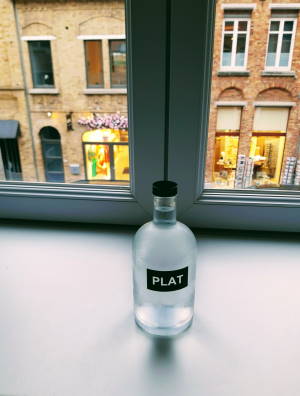
One solution implemented by B&B De Arend incorporates “Refuse” and “Rethink” strategies on how drinkable water is provided to guests. By bottling their drinkable water, the business has saved up 3,500 plastic bottles annually.
By using hybrid finance schemes, De Arend invested in green energy by installing 26 solar panels, batteries, and a hydrogen power plant with two heat pumps that generate electricity, hot water, and air conditioning.
Tania and Olivier, the owners of the B&B, placed the batteries in the hall to spark spontaneous conversations. “We want to show that a small B&B like ours can make a difference,” they said.
Before the investment, there was no central heating at De Arend. All six rooms had individual electric heaters.

Since June 2021, between 20% and 50% of De Arend’s electricity has been produced by the sun. The batteries provide the rooms with power during the evenings.
The energy needed for hot water is provided by the hydrogen pumps. Through cracking natural gas into hydrogen, these pumps can turn 1kw into 3kw.
With an estimated payback period of 8.5 years from these sustainable investments, De Arend has seen their monthly energy bill decrease by an average of EUR 650 and they have saved 22,500 kWh of grid power.
Their carbon footprint, and those of their guests, is also smaller.
The interventions were guided by Westtoer.
An experienced sustainability consultant was appointed to coach Tania and Olivier. The consultant offered personalised advice based on their expressed needs as well as opportunities for De Arend of which they may not have been aware. The advice extended to helping Tania and Olivier find suppliers to install and set up the solutions.
Also see Angelo Sciacca’s other “GT” Insights
“From linear to circular: How to build resilience in small islands”
“How can a circular tourism economy help repurpose heritage buildings?”
“Save to sustain: Frugal innovation & traditional knowledge in tourism”
Working together with the expert was invaluable.
After implementation, Westtoer organised a press conference to build awareness and to show other tourism SMEs a concrete example of possible circular investments that are transferable and financially feasible.
This example shows how small tourism businesses can commit to sustainability and highlights opportunities for viable circular entrepreneurship in the tourism sector.
De Arend’s philosophy is that sustainable solutions should not compromise guest comfort and luxury, but rather enhance it. In fact, their slogan is “more luxury with no or less impact on the environment”.
Tania and Olivier proudly tell guests their story of sustainable living while offering them locally sourced products, fully air-conditioned rooms, and a wellness garden.
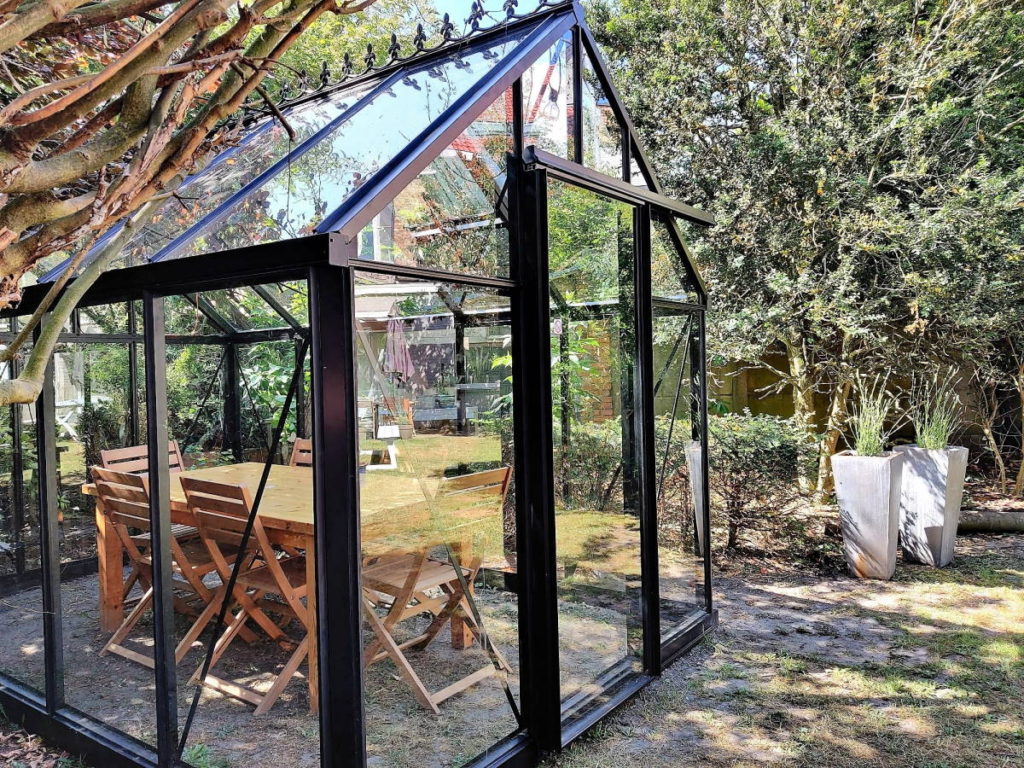
The FACET vouchers scheme helped Tania and Olivier take their first steps in implementing circular solutions for De Arend, however the success of the project mostly relied on their intrinsic motivation and determination.
While further research will determine to what extent they can convince their guests to join their journey towards a more sustainable future, it is worth noting that this is the very first green business in the region. And it sets an example for others to follow.
What do you think? Share a short comment, anecdote, or question below. Or write a “GT” Insight of your own. The “Good Tourism” Blog welcomes diversity of opinion about our travel & tourism industry because travel & tourism is everyone’s business.
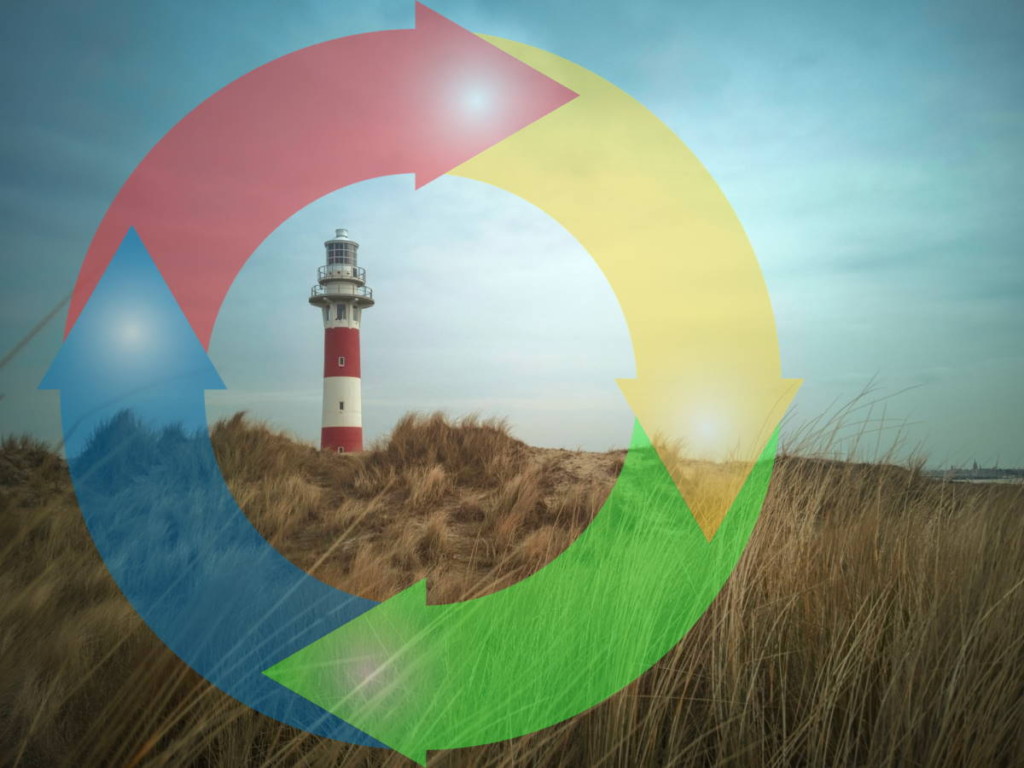
Featured image (top of post): Lighthouse at Nieuwpoort, Belgium by Wouter Martens (CC0) via Unsplash. Arrows by GDJ (CC0) via Pixabay.
About the authors
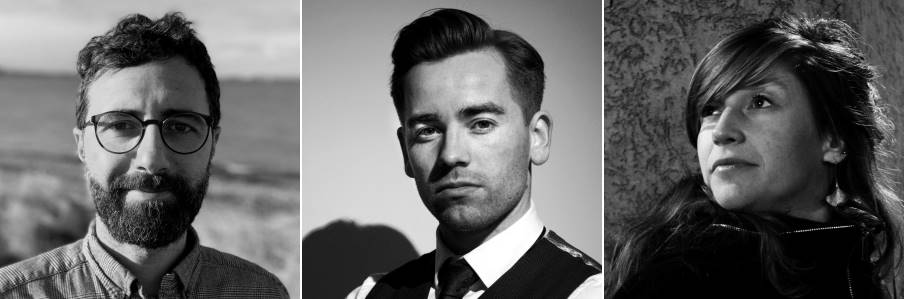
Angelo Sciacca is a Research Fellow in Circular Entrepreneurship at the University of Greenwich, UK.
Lucien von Schomberg is Lecturer in Creativity & Innovation at the University of Greenwich, UK.
Eline Brutyn is a Project Manager at Westtoer, Belgium.